Thursday, June 18, 2015

The Future of Quality

ASQ's 2015 Future of Quality report, titled "Quality Throughout", examines the changing role of quality. The 88-page report is a compilation of essays from experts in their fields from around the globe. In a guest post to the ASQ CEO's blog, Laurel Nelson-Rowe, ASQ Managing Director, asks for feedback from ASQ's Voices of Quality bloggers.

I have experienced many changes in the field of quality over my 35 year career. Today's quality professional must not only be proficient in the knowledge and application of quality principles, methods and tools to improve processes, products and services, the effective quality professional must never stop learning and experimenting.

The "indispensable" quality professional is fully aware of mega-trends, CEO challenges and emerging markets, and is able to successfully communicate/ translate/ faciltate those long-term opportunities into aligned business-focused strategies and tactics for increased customer satisfaction, competitiveness and sustainable growth.

The indispensable quality professional guides leadership in the rigorous evaluation of its business results and leadership performance against expectations, and is constantly benchmarking best practices - from within and outside its sector - for innovative and disruptive improvement of its key systems and process. The indispensable quality leader is trained and competent in ISO and other industry-specific quality standards, but must also be knowledgeable in the understanding and application of the  Baldrige Criteria (or other proven excellence frameworks such as the Deming Prize). Recognized winners and high-performing applicants of these national and local organizations are target-rich role model organizations with demonstrated best practices ripe for replication.

The indispensable quality professional recognizes the impact of social media and respects the influence of on-line word of mouth held by today's globally-connected, savvy consumer. Strengthening customer relations while learning how to listen and interact with the customer via social media will greatly enhance the organization's perceived value to the customer. Successfully implementing an effective social media engagement strategy is another important opportunity for today's quality leader.

Agility, adaptability and life-long learning are important attributes for today's and future quality leaders.

I am retiring from 3M Company after 34 wonderful years to begin my new career as a quality management consultant. I look forward to continued posts sharing my experiences and insights to the global quality community as an ASQ Voices of Quality blogger.

- Robert 'QualityBob' Mitchell

Sunday, March 01, 2015

The Global Impact of (and Need for) Quality

In his February 2015 blog post, ASQ CEO Bill Troy shares ASQ's mission to increase the use and impact of quality in response to the diverse needs of the world, and asks if they are doing enough throughout the world to accomplish that mission?

I work for a multinational diversified manufacturer. 3M Company's strategic quality leadership team chose to become an Enterprise member of ASQ with the intentional decision to make ASQ's Body of Knowledge, community collaboration resources and global best practice sharing available to every one of 3M's 100,000 employees worldwide. 3M is global; ASQ is global. 3M's partnership with ASQ provides yet one more channel of individualized learning and leadership development.

3M's worldwide headquarters is located just east of St Paul, Minnesota, USA. The bulk of 3M's product designs have historically originated in the USA marketplace. 3M leadership has recognized that products developed in one country (e.g. United States) may not have an existing market in other cultures. Many new-to-the-world products might also require changes or modification in behavior before the product can realize its true potential. 3M has responded to the need for region-specific products by building design centers and customer innovation labs located in countries around the world. The role of the regional design center is to enable and promote product designs specific to the local market need and cultural norms.

Regardless where the the products are developed, fundamental quality principles are bedrock. The use of VOC with sound experimental design and statistical analysis is a requirement for effective and efficient product (and process) design, development and commercialization. Basic statistics, PDCA, lean, Six Sigma, SPC, root cause analysis, CAPA, and many other traditional quality tools and methods too numerous to cite here are universally applicable to assure continual improvement of products, processes and systems for operational excellence, customer satisfaction and profitable growth.


A growing area of quality focus and product development is around sustainability and social responsibility. ASQ and the quality discipline in general have a unique opportunity and responsibility to help organizations learn to innovate and replicate global best practices in sustainable product development, lean manufacturing practices, improved reliability and product life cycle management for the benefit of society and future generations.

Sunday, January 25, 2015

Finding Inspiration from Quality Leaders

In his January 2014 blog post, ASQ CEO Bill Troy talks about his recent meeting with Paul O’Neill, a quality thought leader, 2013 Juran Medalist, former U.S. Secretary of the Treasury, and CEO of Alcoa from 1987 to 1999. Paul O'Neill is currently applying the principles of quality to fix the problems facing U.S. healthcare. Towards the end of his post, Bill Troy asks whose teachings on quality influenced you or inspired you?

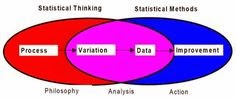
Early in my professional quality career I had the great pleasure and unique opportunity to work for Galen Britz, a giant in 3M's storied culture of quality and a huge advocate for Deming's System of Profound Knowledge. Galen served as Quality Manager of several 3M business units and Chairman of 3M's Corporate Quality Council before retiring in 1999. Galen Britz was also my mentor. Galen is a kind, spiritual and gentle man, and my friend. I learned a great deal about authentic leadership from Galen. Another key figure in my 3M quality career is Thomas Pohlen who, I believe, was the quintessential statistical practitioner and prototypical Master Black Belt long before 3M formally adopted Six Sigma. Tom mentored and trained a considerable portion of 3M executives in statistical thinking during the 1990's. Galen Britz and Tom Pohlen were champions of "Statistical Thinking" in 3M and were instrumental in influencing 3M leadership to bring in Heero Hacquebord to teach and coach "Statistical Thinking for Leaders". This training enabled our leaders to pursue real, meaningful, continual improvement of our products and processes through the proper application of quality strategies and tools to separately address special cause, common cause, and structural variation.


My association with Galen Britz, Tom Pohlen and Heero Hacquebord seeded my interest and directly led to my many years of active membership and service in the ASQ Statistics Division. Participation in the ASQ Statistics Division afforded me the great privilege to meet and work with such notable Quality professionals and thought leaders as Stu Hunter, Lynne Hare, Roger Hoerl, Ron Snee, Davis Balestracci, and many others too numerous to call out, whom I am indebted for my understanding of and passion for customer-focused quality.

Today, my biggest thrill and greatest sense of accomplishment is guiding and coaching the development of my students, direct reports and mentees. I strive to create the same sense of joy, excitement and enthusiasm in learning, development and, of course, contribution to business and society.

Thursday, December 18, 2014

Is Quality Ambitious Enough? Facilitating Uncommon Connections.

Evangelize: To promulgate or promote something enthusiastically (freedictionary.com).

In his December post on the ASQ blog, A View from the Q, CEO Tony Hill challenges the professional quality community whether we are doing enough to grow the impact of our community of practice:
  • How do we encourage those who work in quality to understand their own value?
  • How do we spread the message of quality in a marketplace overflowing with ideas about how to boost profitability and ever-changing management trends?

Alternatively stated:
  • How do we bring non-traditional quality improvement practitioners into the Quality CoP - people/roles such as customer listening, process improvement, patient safety, etc. 
  • How do we better communicate our values and vision (our "Why") to a new generation of potential quality leaders?

It is my opinion that Quality professionals, by nature, tend to be altruistic and generally introverted. Yet in order for us to increase our reach and grow our impact we must elevate our thinking, stretch our goals and raise our voices to promote and demonstrate the broad impact of quality beyond the traditional focus of compliance, standardization and convergent thinking for incremental improvement. While these areas of concern are certainly necessary and important for business continuity and efficiency, they are not wholly adequate to ensure sustainability and growth.

Today's ever-increasing rate of change and complexity requires divergent thinking and transformational leadership to solve truly wicked problems confronting individuals, teams, organizations, countries and society at large. Wicked problems cannot be effectively solved using simple solutions alone. The good news is that Quality has a unique opportunity to sit front and center at the round table. Critical thinking skills, 7 Management and Planning Tools, new Creativity tools, and Statistical Thinking are the preferred tools in the systems-thinking quality professional's toolkit to help individuals and organizations build their profound knowledge to drive innovation and disruptive change. Creativity tools are a terrific approach to gather ideas from all levels of the organization, and to explore new ways of thinking, making uncommon connections, and discovering innovation.

Image from www.thethinkingbusiness.com
Author unknown


Quality professionals must also adopt and become proficient in the use of social media to reach the highly-connected (and sometimes less social) younger generation of future leaders. We must increase our agility, become "comfortable being uncomfortable", and think globally in today's flattened world.

Monday, November 24, 2014

Transformational Quality [Business] Leadership

In his November post to A View from the Q, ASQ CEO Bill Troy explores the linkage between Quality and leadership. Bill suggests that the quality professional, wherever he or she may be and at whatever level of management, must be a leader to be effective.

I subscribe to the theory that the primary role of the Quality leader in any organization is to manage the organizational white spaces at the hand-offs between siloed functions within horizontal work processes and systems.


The most effective leaders possess and expertly demonstrate "soft skills" necessary for promoting and advancing teamwork, collaboration, cultural diversity and a high-performing, engaged workforce, while exhibiting strong project management skills, decisiveness and acute global business acumen.


The successful quality professional / leader is also a teacher, coach, mentor and influencer.


During the first 15 years of my career I focused on the effective application of traditional tools and methods to improve processes and products. Today, as a Quality leader, I strive to be a mentor and coach, helping others to grow and succeed. Today’s increasing rate of change and complexity requires transformational leadership - a performer who achieves results and also a community builder who helps others in the organization to succeed. The rate of change is accelerating exponentially, complexity is growing, "wicked" problems are increasing.

"Transformational leaders establish enhanced, more effective mindsets within their community. They are inspired by a deep understanding of individual and collective purpose; and they successfully bring into creation that which previously did not exist."                                         – EOQ Transformation Summit 2005

Current ASQ Chair Stephen Hacker has authored nine books on the topic of transformational change including most recently, How to Coach Individuals, Teams and Organizations to Master Transformational Change: Surfing Tsunamis. Stephen Hacker defines a transformational leader as one who balances creativity and administrative responsibilities; is analytical yet visionary; energetic and empowering; a performer and also a coach. The transformational leader is equally skilled leading compliance/standardization type activities and breakthrough continuous improvement projects. The transformational leader effectively balances workforce focus to improve internal efficiencies for operational excellence while strengthening the organization's customer focus for sustainable growth.   See illustration below.


*Used with permission. Stephen Hacker, CEO and Founding Partner, Transformation Systems International, LLC (www.http://tsi4results.com).For more information about Transformational Leadership, please read the paper "Transformational Leadership: Creating Step-Functional Change" by Stephen Hacker.

Thursday, November 20, 2014

Using Social Collaboration to Improve Customer Experience

Today's definition of quality is “customer experience”. Customer experience (‘CX’) is defined as the sum of all experiences a customer has with a supplier of goods and services, over the duration of their relationship with that supplier. From awareness, discovery, attraction to interaction, purchase, use, cultivation and advocacy. I am also reminded of the following perceptions of quality:
  • "Quality in a service or product is not what you put into it. It is what the customer gets out of it.”- Peter Drucker
  • “Customers must get what they want…When they want it, the way they want it, at a fair price.”-Unknown

Customer advocacy is regarded as the ultimate expression of customer engagement and brand loyalty. While a key measure of customer loyalty is “willingness to recommend”; a key measure of customer advocacy is “Net Promoter Score” or word of mouth recommendation. Word of Mouth marketing such as customer reviews, leveraged by social media, seems to outperform traditional forms of corporate marketing and advertising. Building trust is a cornerstone to increased customer advocacy.

Producers in the consumer market have at least two distinctly different - but very important - types of customers: the retail channel partner (“account”), and the end-user (“consumer”). Success in the Consumer market depends on producer's ability to consistently demonstrate and deliver increased profitability to the retailer, while delivering predictable quality and reliability to the consumer. Understanding, supporting, and owning the retail customers’ strategic plans coupled with flawless operational and tactical execution, helps assure preferential placement of the producer's product versus competition, resulting in increased sell-in. But sell-in is not the sole variable that dictates sales growth. The producer must also consistently meet its end-user consumers’ expectations in order to achieve increased purchases, or sell through. Anticipating consumers’ unmet, unarticulated needs through such tools as prototyping, focus panels and QFD, manifesting in exciting, innovative, new products and features help build customer satisfaction and brand loyalty. Delivering exceptional service to their retail customers and superior experiences to their consumers ultimately drives the trifecta of increased sell-in, sell-through and frequent replenishment. Operational excellence coupled with consumer-focused continuous improvement will help assure sustainable quality growth.

Understandably, purchasing agents in many traditional B2B industrial markets give preferential treatment to suppliers with demonstrated, capable quality management systems (e.g. ISO-registered) as a means to reduce their supply chain risk. Certainly, an effective QMS is also important to the B2C retailer in the consumer market to promote operational efficiency, but word of mouth recommendations (“earned” media) tend to drive end-user purchasing decisions. Indeed, customer Ratings & Reviews are gaining more credibility in both B2B and B2C markets. In a recent study it was revealed that
  • 62% of surveyed B2B professionals read user Ratings & Reviews for business products or service
  • 92% of consumers around the world say they trust earned media, such as Word of Mouth recommendations from friends and family, above all other forms of advertising
  • The average social customer will tell 42 people about a good experience
  • The average social customer will tell 53 people about a negative experience.

In the growing world of social collaboration, recent studies have also shown that:
  • 50% of Facebook users expect a response to an inquiry in 1 day or less
  • 80% of Twitter users expect a response to an inquiry in 1 day or less
  • 58% of customers who have tweeted about a bad experience have never received a response from the offending company

Special software today allows businesses to crawl the internet searching for Twitter comments whenever their brand is mentioned – positive or negative. Software also allows organizations to capture social media comments when their product or brand is mentioned, whether posted to its brand website or its retail partner website (e.g. Wal-Mart.com, Lowes.com, Amazon.com, etc.) The organization's Customer Service Representatives (CSRs) then attempt to contact that individual to learn more about the source of their dissatisfaction for purposes of delivering timely, satisfying resolution, turning a negative situation into a positive experience for that consumer. Consumers' comments are compiled, categorized, and prioritized for root cause analysis and corrective action planning. Analysis of consumer Ratings & Reviews and feedback from product sampling trials are captured for future product improvement opportunities.

Social media tools are gaining importance as yet another means to improve customer listening, build customer loyalty and identify opportunities for process and product improvement.

Sunday, October 26, 2014

Recruiting Members and Volunteers in a Changing Landscape

In response to the latest blog post by ASQ CEO Bill Troy, "Recruiting Members and Volunteers", I thought I'd offer my experiences in recruiting new members and volunteers to two member units of ASQ: the MN Section and the Statistics Division.


I actively served in the ASQ Statistics Division between 1991-2003 and the local MN Section between 2004-Present. For a little background, ASQ is a not-for profit global professional society of "people passionate about quality who use the tools, their ideas and expertise to make our world work better." ASQ is comprised of 28 Divisions, Forums and Interest Groups whom own the bodies of knowledge within ASQ, 248+ Sections that function as local communities of practice, plus several on-line "Communities" formed around specific topics of interest. All ASQ member units are member leader driven. Division and Section objectives are achieved through engaged, active member volunteers who contribute their time, energy, experience and expertise to better the Society and their chosen profession.

Regardless of the type of organization involved, recruitment of engaged employees and volunteers begins with a shared vision and purpose. Simon Sinek, noted motivational speaker and author of Start with Why and Leaders Eat Last reveals the concept of the Golden Circle and the critical importance of organizations to understand and effectively communicate their "Why", rather than What they do. Simon Sinek famously states that "People [loyal employees, partners and customers] do not buy what you do; People buy why you do it".

Effective strategic planning is a crucial element to driving organizational growth and success. One of the first things we did as member leaders of the ASQ Statistics Division and ASQ MN Section was to revisit our vision and mission as part of our strategic planning process. Is our vision compelling? Is our purpose inspiring? Is our mission articulate and differentiating? In the latest strategic planning session recently completed by the ASQ MN Section leaders we fine-tuned our vision based on feedback of our members, an environmental scan and a SWOT analysis. Leaders create and sustain the organizational culture. The MNASQ Section leaders understand the need - the urgency - to recruit more engaged volunteers to help the Section achieve its goals and objectives to grow and deliver increased member satisfaction.

MNASQ Vision
To be the community of choice providing professional development focused on creating & sustaining a culture of Quality that embraces innovation and enhances the total customer experience.

With a shiny new vision established, the Section leadership then identified several key strategies to recruit and retain members while also recruiting and placing member volunteers. We use the X-matrix and business execution process to align our metrics, tactics and annual objectives to our long-term strategies and vision, mission, culture ("True North"). Sample annual strategies include increased networking opportunities such as an unstructured "unconference", increased alliances with complementary professional societies to expand our portfolio of products & services while growing our base of potential members, increased use of technology to connect and collaborate with our Section members outside of the Twin Cities metropolitan area, implementation of our volunteer placement process, and a renewed focus on recruiting employees from within ASQ "Site" and "Enterprise" organizational member companies. Supporting the organizational member recruitment strategy, the MNASQ Section will soon launch its 3rd annual Executive Roundtable - a by invitation only, peer-to-peer networking session targeted to senior leaders of local businesses, healthcare providers, educational institutions, not-for-profits, retailers, financial sector and local gov't.

A new strategy we are embarking upon in 2015 is one we term "assumptive volunteerism". Because ASQ is by its very nature a member-driven professional society, the MNASQ Section Leadership will welcome every new member as an assumed (i.e. implied) volunteer. Every new member will be assigned to one of several committees or project teams with the option to select a different committee or project based on his/her interest, or to opt out all together. (We recognize that not every Section member has the time or the desire to actively participate; hence, our need to understand how that new member defines a satisfying customer experience). The key is not to passively ask individuals to volunteer for some nebulous, undefined activity, rather to assertively assign new members a meaningful role in the organization.

In the end, the success of strategy implementation is dependent on effective leadership. In closing I offer this link to Brian Lassiter's blog, Yours in Improvement. Brian is President of the Performance Excellence Network serving Minnesota, North Dakota and South Dakota. Brian's latest post offers 31 leadership quotes and 31 things leaders should STOP doing to improve their effectiveness.